3D Vision Systems
3D smart sensors for improved factory production, quality control, scanning and process optimisation.
Leverage the power of smart 3D vision to automate your in-line product quality inspection processes.
Automate, inspect and optimise your production with 3D smart sensors. Everything from parts inspection, automation, robot control and quality control – through to assembly inspection, surface checks and measurement can all be achieved with 3D smart sensors.
Scanning in 3D allows you to verify correct shape, geometric features, interior aspects and critical defect in the Z axis. Parts and shape quality checks in three dimensions at production speeds now becomes a reality. 100% inline quality control and material optimisation.

Why you need our 3D vision systems
Discover the benefits of IVS providing your 3D smart sensor solution

Powerful 3D Scanning
Our vision guidance systems are designed for quick and easy integration with all the major robot manufacturers. Our vision systems take the guesswork out of integration. With both 2D and 3D systems for advanced robot guidance.

Easy-to-use 3D Vision
Our 3D vision sensors, systems and solutions are ready-made for ease-of-use automated inspection. Our powerful vision interface provides real-time data and statistics so you understand your production.

Versatile 3D Inspection
Our 3D machine vision solutions safeguard your quality, providing a wide range of features and properties. Flexible and adaptable, with everything from precision metrology checks through to product and packaging verification.
Our 3D vision inspection products
Explore some of the key features and benefits of using IVS 3D vision systems for your production and process control
Innovative 3D Profile Sensors
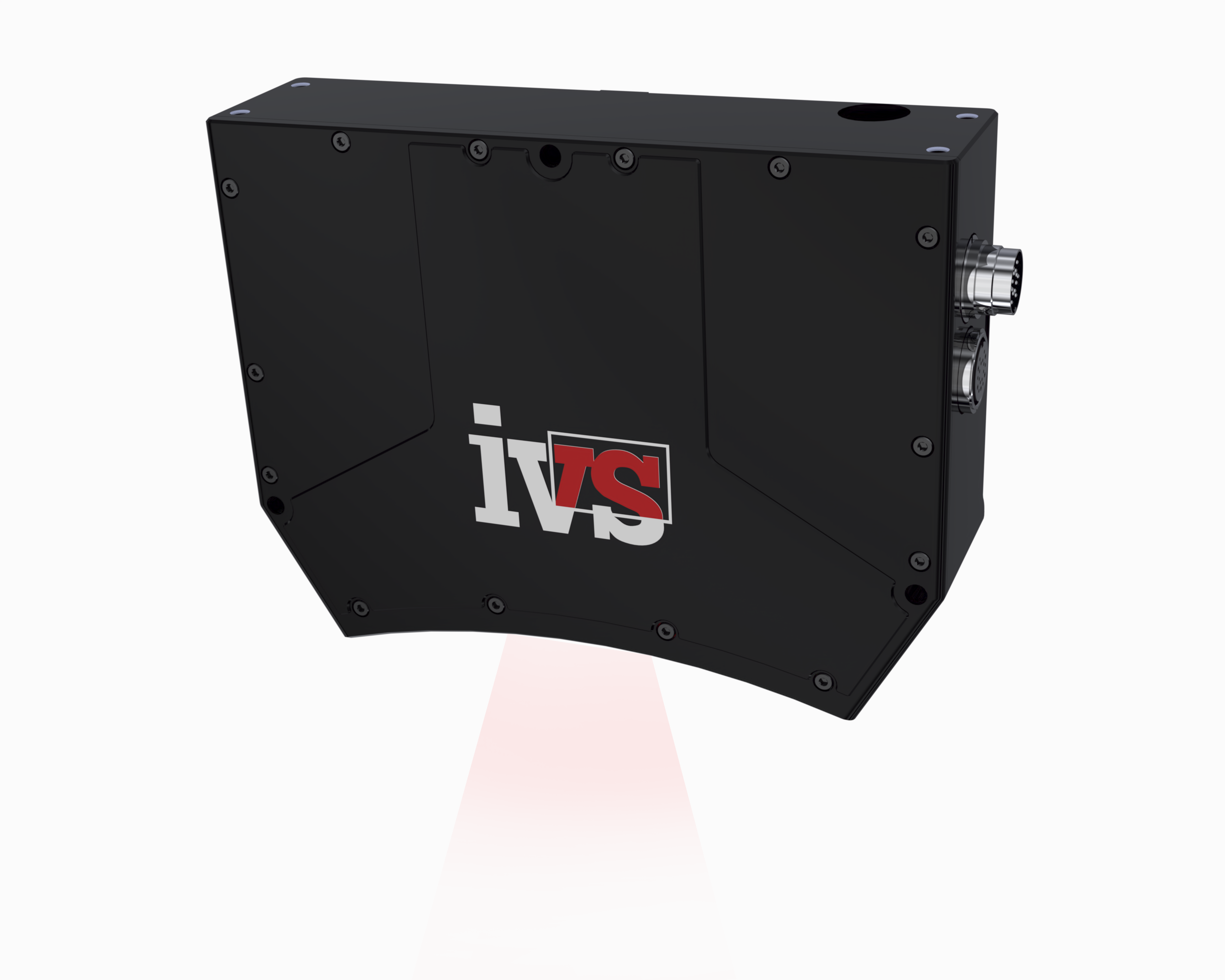
3D laser line profile sensors for high-speed, high-volume applications. Our 3D smart sensors are designed for the demanding industrial conditions of the factory floor. The simple and flexible design enables factories to reduce costs and maximize profitability by improving efficiencies in product validation. The series comes in five standard models but can also be customized to suit specific factory automation requirements. The units are pre-calibrated to scan micron-level details, with high speed and low latency.
3D Snapshot Sensors
Capture 3D images in one snapshot. For adaptable 3D vision combining award-winning IVS vision tools with latest generation 3D image capture enables reliable and accurate solutions for applications such as assembly verification, in-line measurement, and robotic guidance. LED structured lighting with built-in 3D measurement tools for high-precision area scanning and inspection.


3D Robot Vision & Bin Picking
Robotic bin picking of randomly placed parts is a notoriously difficult task for robots, but increasing levels of flexibility and adaptability using 3D vision are making today’s robots capable of effectively picking randomly oriented objects. Automate your processes, increase effectiveness and throughput whilst ensuring the highest quality. Let IVS robot vision provide the 3D eyes and brains for your robots and bin-picking solutions. Our structured light projection approach provides accurate point clouds for fast localisation of any desired part. The robustness of the scanner ensures superior quality of scans, which makes it the ideal scanner for even the harshest environments. Fully integrated with all standard robots, we can deliver a complete turn-key bin picking solution for you.
3D Line and Point Confocal Sensors
IVS line confocal sensors are based on an optical method called lateral chromatic aberration where white light emitting from a sensor’s transmitter is split into a continuous spectrum of wavelengths. Reflected wavelengths that are “in focus” (return through a pinhole) map to height variations. This technology is available in co-axial design for single and multi-point geometries, and off-axis design for line geometry.
- Roughness analysis of transparent and non-transparent surfaces.
- Measurement of curved edges on mobile phone displays, contact lenses and moulded products.
- Offset, step height, layer thickness, air gaps, clearance, distance, angle, area, volume, and coplanarity analyses in various industries.
- Failure detection on multilayer components.
- Height analyses for assembled products.
- Seal integrity analysis of medical devices and pharamceuticals.
- Various analyses in printed, hybrid, flexible, and organic electronics.


Interested in 3D Vision Inspection Solutions?
Get in touch today so we can answer and questions you have regarding our 3D profiles, sensors and 3D vision solutions. See how they can save you money, automate your process and increase your yield.
Send us a message and we will respond as soon as possible.
Have a Question? Get in touch
Integrated 3D inspection vision systems and machines – designed, built and installed by our expert engineers.
Why you need 3D vision systems
3D technology captures the shape and topography of an object as opposed to 2D which only captures contrast. With 3D shape, you can measure geometric features on a surface regardless of the surface colour.
In summary, 3D offers:
- Volumetric measurement (X,Y, and Z-axis) provides shape and position related parameters.
- Contrast invariant, ideal for inspecting low contrast objects or different coloured products.
- Immune to minor lighting variation or ambient light compared to 2D vision.
- Higher repeatability due to integrated optics, lighting, and pre-calibration.
- Simpler to build multi-sensor setups for large object inspection.
How to 3D vision sensors work?
Dependent on the 3D sensor involved, they use slightly differing technology. The main basic 3D vision systems available are:
Basics of Laser Triangulation
A laser triangulation sensor projects a laser pattern onto the surface of an object and images it with a camera or receiver array. A processor locates the imaged laser on the camera and calculates the distance between the sensor and the surface. Lasers are used in triangulation sensors because they efficiently produce small, intense, and precisely focused beams that reduce camera exposure times and effectively eliminate errors caused by object motion blur.
Basics of Structured Light
Structured light (fringe projection) creates a 3D point cloud of an object’s surface by using reflections of one or more light patterns projected onto the object. To achieve the highest accuracy and sensor stability, stereo cameras are used in the sensor. Blue LED illumination is used to create high-contrast patterns that provide high-resolution scanning while being resistant to ambient light. LED lighting is non-hazardous to the eyes and does not require compliance with laser safety regulations.
The advantages of using 3D vision systems versus 2D vision systems.
One of the driving forces behind industrial automation is machine vision. For a long time, it was primarily propelled forward by advancements in 2D image sensing, and for some applications, 2D methods remain the best option. However, the majority of the challenges that machine vision faces today are 3D in nature. So what are the advantages of 3D machine vision, against 2D machine vision?
1. Depth or height measurement. Detailed 3D height information can be gathered from the point cloud created. Historically this would have been completed with a single laser sensor, but the latest 3D profile and snapshot cameras can complete this calculation in real-time. How far away is the object from the camera? How tall is an object and how does it compare in size to its neighbour?
2. Pose. How is the object presented and at what angle is it lying? In bin-picking this is critical information. The 3D vision system can tell the robot how to approach each object in the bin, in order to pick it successfully.
3. Measurement Data. Given the 3D point cloud which is calculated, the amount of data available for analysis is multipled by an additional factor. This allows for operations to gather production data and information on quality changes to a high level.
4. Object Topography. 3D vision allows for the topography of a part to be analysed. This means dents, dints, scratches, shorts, flash, moulding defects, surface and 3D data to all be analysed for quality acceptance.
What can 3D Robot Vision do for me?
Adding 3D vision to a robot turns repetitive, fixed motion into smart movement that can unlock greater value for your automation investment. What can IVS offer for robot vision? Vision Guidance
- We integrate IVS robot vision with robots using built-in hand-eye calibration.
- Our vision sensors can be used on insertion jigs to identify alignment features while directing movement to insert or mate one part with another.
- Applications include automotive windshield/roof insertion.
Pick and Place Robot
- We integrate IVS robot vision to identify target objects and guide the robot to pick them up.
- Robot moves target from one location to another and places it in the correct position/orientation.
- Applications include various picking tasks (for example, structured and semi-structured bin picking).
Flexible Inspection Solutions
- We provide complete solution for flexible 3D vision inspection.
- IVS vision inspection provides rich and detailed 3D scan data for precision measurement and inspection (for example, in automotive gap and flush inspection), and communicates pass/fail control decisions to factory machinery and PLCs.
Material Dispensing
- IVS 3D vision is used for pre- and post-assembly inspection applications.
- Inspection tools makes glue bead and weld seam inspection easy.
- Our system carry out inspection on both moving and stationary objects.
