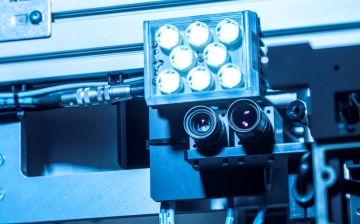
Vision System Automatically Checks Aerospace Assembly

A new video on the IndustrialVision YouTube channel showcases a special purpose vision machine for the inspection of a complex aerospace sub-assembly. Quality and reliability are essential, and so automated visual inspection is crucial to the manufacturing process. This machine was designed as a final end of line inspection machine to confirm product quality before it is shipped to the customer.

IVS created a special purpose inspection machine utilising five digital Gigabit Ethernet cameras and one pan, tilt and zoom camera. Lighting is an integral part of the system, using high intensity white LEDs combined with red laser line projections. IVS machine vision software contains a wide range of standard inspection functions, making it applicable to any industry. The software determines that the complete sub-assembly is manufactured correctly looking for machined surfaces, inserts, labels, screws and helicoills.

The aerospace customer can be assured that what they are supplying to their customer is of the highest quality and reliability. In addition they have historical photos and data supplied from the machine for every product leaving their factory for future traceability.

The video can be viewed at: http://youtu.be/9RGBTXR-h6A

Automation Fuels US Automotive Manufacturers Resurgence

Vision systems continue to be a key aspect of industrial automation and allow manufacturers to increase yield and quality across their factories. According to “AutomationWorld” automation and flexible manufacturing techniques are supporting U.S. automotive manufacturers ability to meet the increasing demand. Machine vision systems are critical requirements when it comes to adopting flexible and lean manufacturing techniques.

According to the article “flexible manufacturing is the current mantra for U.S. automakers. In 2008, automotive plants closed, unions restructured contracts, and Tier 1 and 2 suppliers simply went out of business due to lack of sales. In 2009, U.S. vehicle sales plummeted to 10.4 million units, and 27 U.S.-based auto plants were closed.

Fast forward to 2013 and U.S. automotive plants are running three shifts, six days a week, and edmunds.com predicts more than 15.5 million U.S. vehicles will be sold, with forecasts of 16.4 million units to be sold in 2014. Chrysler sales alone hit a six-year high in 2013.

Chrysler has three less assembly plants than they did 5 years ago and one less stamping plant therefore this can only be achieved through greater use of automation.”